
Organizations that proactively develop their talent pipelines position themselves to quickly fill critical roles, retain top performers, and ensure long-term organizational stability.
By adopting strategic, forward-looking workforce practices, companies can cultivate a resilient talent ecosystem that drives innovation, boosts engagement, and strengthens competitive advantage. This guide outlines proven best practices to design and maintain a robust talent pipeline aligned with your business goals and prepared for future growth.
What Is a Talent Pipeline?
A talent pipeline is a strategic framework comprising both internal and external candidates who are ready or being prepared to assume key roles within an organization. It includes high-potential employees identified through succession planning and external candidates engaged through consistent employer branding and talent-nurturing efforts.
Unlike reactive hiring, a sustainable talent pipeline anticipates future needs, building a pool of qualified, culturally aligned, and motivated talent. This approach reduces hiring risks, improves readiness, and ensures seamless talent transitions.
Why a Sustainable Talent Pipeline Matters
A well-maintained talent pipeline delivers critical advantages:
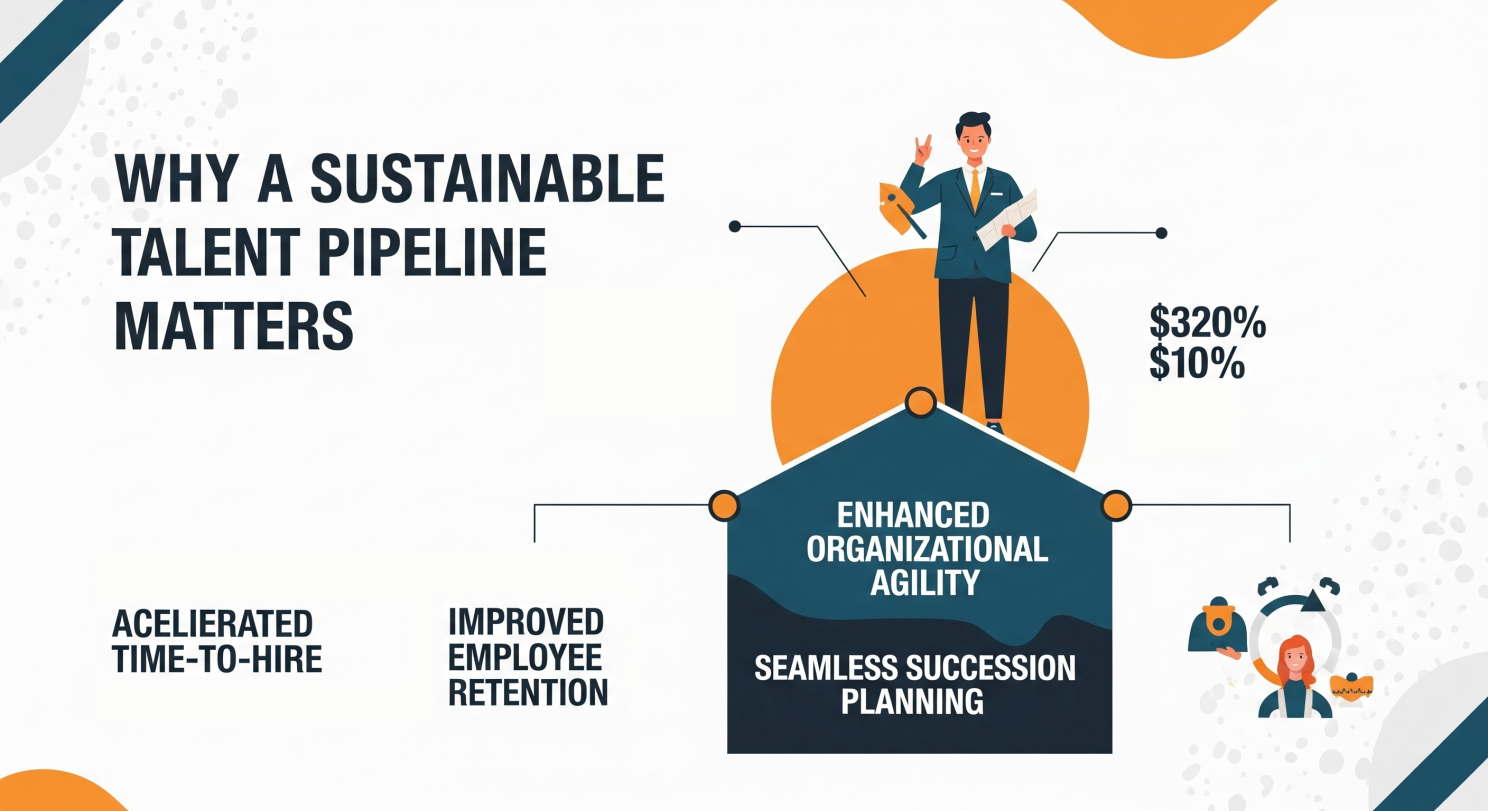
- Accelerated Time-to-Hire: Engaging and preparing talent in advance significantly reduces the time and cost of filling vacancies, minimizing operational disruptions.
- Improved Employee Retention: Investing in internal development and clear career paths fosters loyalty, job satisfaction, and reduces turnover.
- Enhanced Organizational Agility: Access to a diverse, skilled talent pool enables rapid response to market changes and evolving business needs.
- Seamless Succession Planning: Ensures smooth leadership transitions and business continuity during changes or unexpected departures.
Best Practices for Building a Future-Ready Talent Pipeline
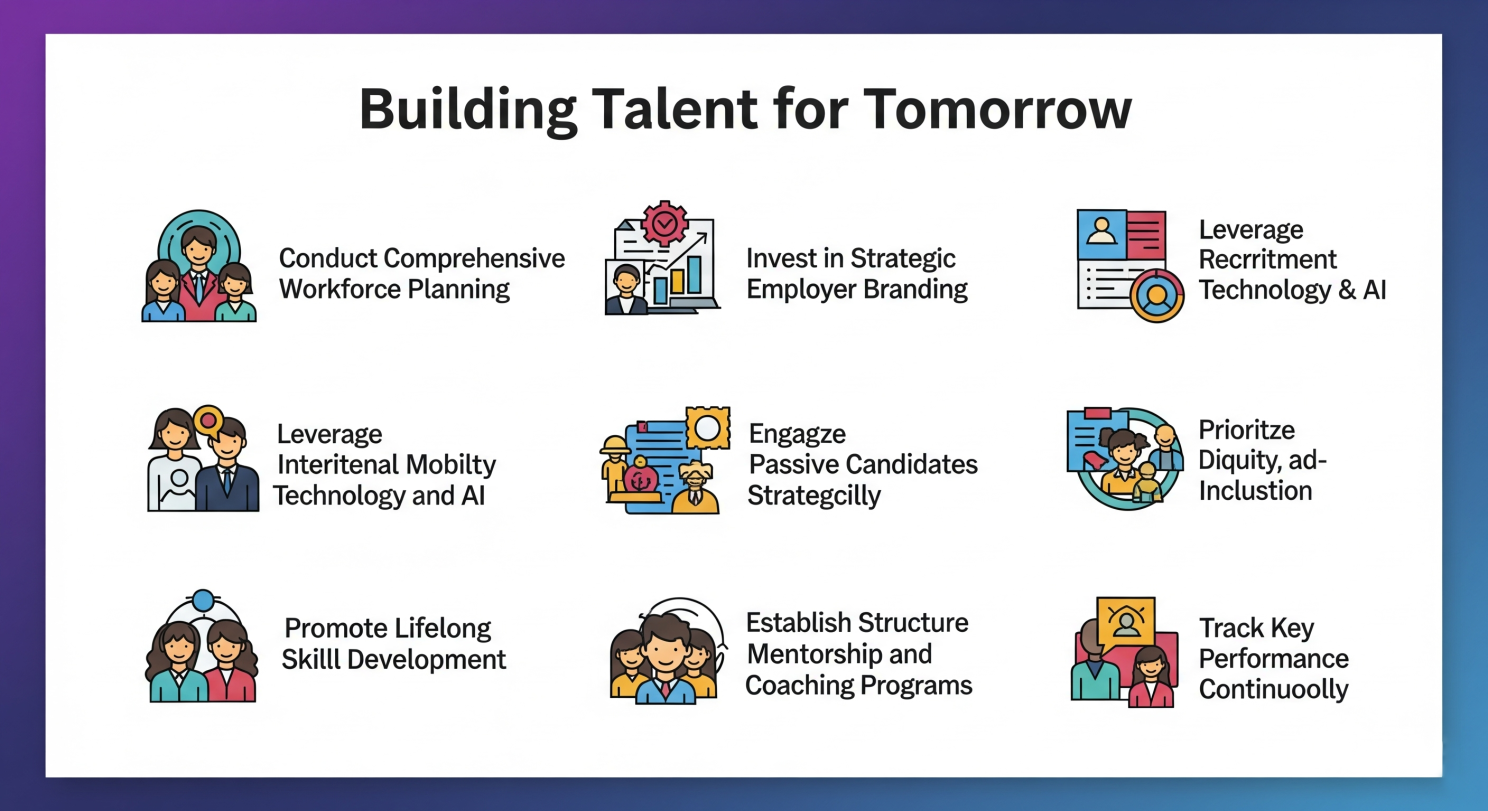
1. Conduct Comprehensive Workforce Planning
Use data-driven analysis to assess current workforce capabilities, identify skill gaps, and forecast future talent needs aligned with strategic objectives.
2. Invest in Strategic Employer Branding
Position your organization as an employer of choice by showcasing your culture, values, growth opportunities, and impact through compelling content and employee testimonials.
3. Nurture Internal Mobility and Talent Growth
Develop transparent career paths and upskilling programs that prioritize internal promotions, leveraging institutional knowledge and boosting engagement.
4. Leverage Recruitment Technology and AI
Adopt advanced HR technologies like Applicant Tracking Systems (ATS), Candidate Relationship Management (CRM) platforms, and AI-based sourcing tools to identify and engage top talent efficiently.
5. Engage Passive Candidates Strategically
Build long-term relationships with passive candidates through targeted campaigns, networking events, webinars, and professional communities to tap into high-value talent.
6. Prioritize Diversity, Equity, and Inclusion (DEI)
Proactively source candidates from diverse backgrounds and foster an inclusive culture that values varied perspectives, enhancing innovation and representation.
7. Promote Lifelong Learning and Skill Development
Create a learning-centric culture offering online courses, certifications, mentorship, and stretch assignments to continuously upskill and reskill employees.
8. Establish Structured Mentorship and Coaching Programs
Pair emerging leaders with experienced professionals to accelerate knowledge transfer, strengthen networks, and cultivate a collaborative growth culture.
9. Track Key Performance Metrics and Optimize Continuously
Measure pipeline effectiveness with KPIs such as time-to-fill, cost-per-hire, internal promotion rates, and retention, using insights to refine strategies and maximize ROI.
The Strategic Role of Succession Planning
Succession planning is vital for talent sustainability. Identify high-potential individuals early and provide tailored leadership development to reduce reliance on external hires and ensure critical roles are always backed by prepared successors. This strategy enhances morale, retention, and reduces leadership turnover risks.
Navigating Common Challenges in Talent Pipeline Development
- Economic Volatility: Build a cost-effective, scalable pipeline to stay prepared despite budget constraints or hiring freezes.
- Evolving Skill Demands: Stay agile by integrating future-oriented skills training and market trend analysis into development plans.
- Balancing Short-Term Hiring with Long-Term Strategy: Maintain an evergreen approach that cultivates talent continuously while addressing immediate hiring needs.
Conclusion: Talent Sustainability as a Competitive Differentiator
Building a sustainable talent pipeline is a transformative investment in your organization’s future. When aligned with business goals, empowered by technology, and driven by a culture of learning and inclusion, it enables faster hiring, lower costs, stronger teams, and a resilient leadership bench.
Call to Action
Is your organization ready to meet tomorrow’s talent demands? Begin building your sustainable talent pipeline. The future belongs to those who prepare for it.